
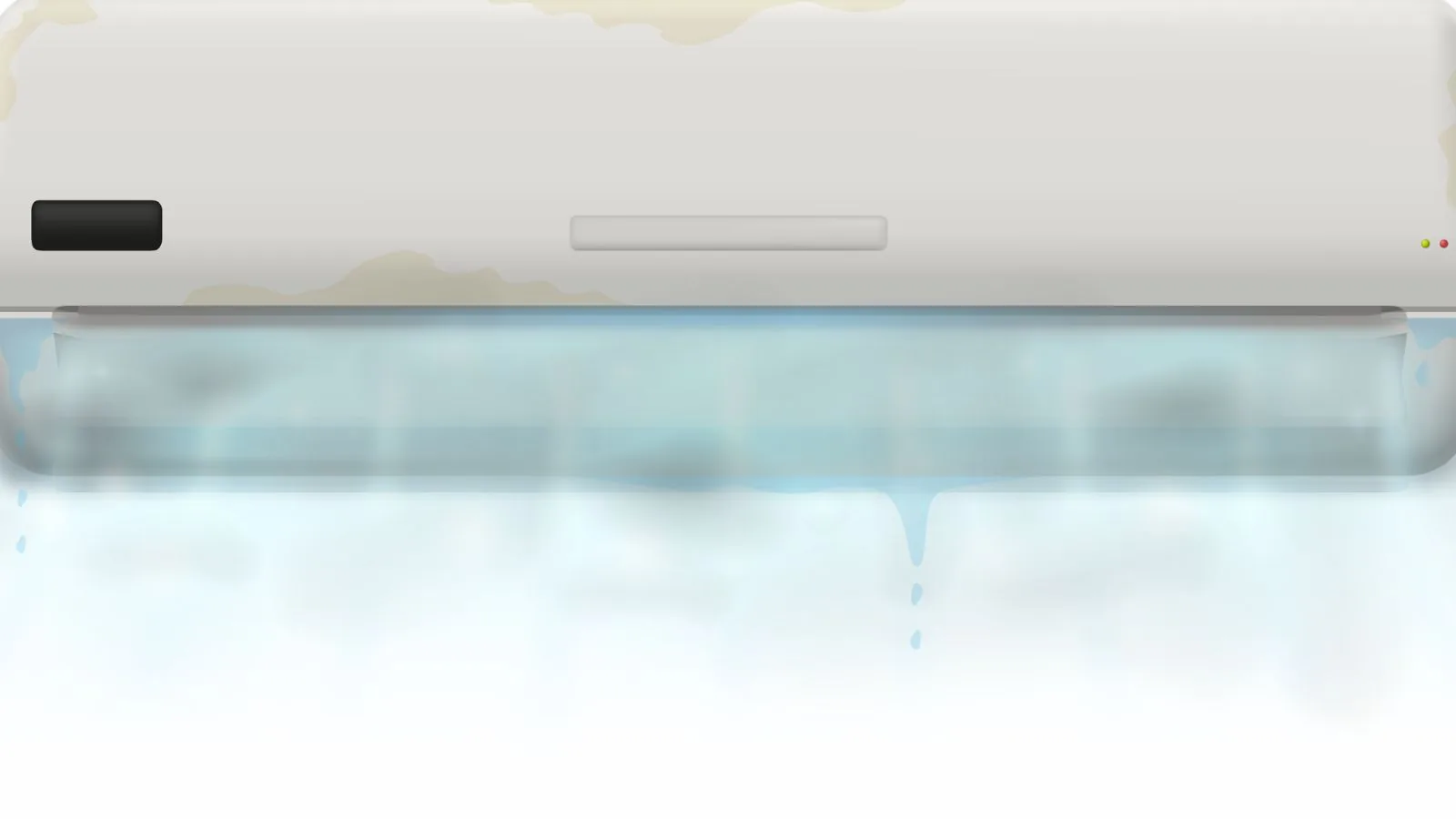
Air conditioners remove humidity from the air, and that moisture has to go somewhere. AC leak water damage in Sandusky, OH happens when the path to the drain breaks down and the water spills inside. Unlike a burst pipe, this is usually a slow leak, but it can soak a ceiling or floor over days.
If you see water around an air handler, a stain near a vent or a wet closet floor, switch the system off at the thermostat and call. Keep the unit off until an HVAC technician checks the drain path.
How a cooling system ends up leaking
The coil collects condensation in a pan, and a drain line carries it away. Over time, algae and debris narrow the line. Once it clogs, water backs up, overflows the pan and runs into whatever sits below. In attic installations, the first sign is often a ceiling stain.
| Cause | Where water appears | Fix |
|---|---|---|
| Clogged condensate line | Around the air handler, in a closet or attic | HVAC drain clearing |
| Cracked or rusted drain pan | Under the unit, ceiling below an attic unit | Pan replacement |
| Disconnected or sagging line | Ceiling, wall or floor near the run | Line reconnection |
| Frozen evaporator coil | Puddle at the unit after the coil thaws | HVAC service call |
Why AC leaks are easy to miss
These leaks start small. A damp stain behind a closet door, a slightly soft floor near a vent or a musty odor in one room can all be early signs. Callers to restoration lines often describe a condensation line that has been backing up for some time before the damage was visible.
Because the water arrives slowly, drywall and insulation stay wet for long periods. That is the setting where mold gets started, so assess the area before painting or patching. EPA guidance says water-damaged materials should be dried within 24 to 48 hours to prevent mold growth, and a slow leak can exceed that window long before you notice it.
What an assessment and drying visit includes
The crew traces the moisture with a meter and thermal camera, checks the ceiling and walls around the unit and looks at the flooring under any vents. If the area is wet, they set air movers and a dehumidifier and monitor readings until the structure is dry.
A ceiling stain from an attic unit follows the plan in ceiling water damage repair. Wall moisture follows wall and drywall repair, and a wet floor goes through hardwood floor water damage repair. All of it relies on the method in structural drying.
Before the crew visits
Turn the cooling system off until the drain path is checked. Photograph the stain and the wet area, and note when you first saw it. If a ceiling is sagging or dripping near a light fixture, stay clear and call the electric utility or 911 for any electrical concern.
For the drying that follows a condensate overflow, the published reference is ANSI/IICRC S500, and a company should be able to say whether its crews work to it.
What shapes the cost of AC leak water damage repair
The leak itself is an HVAC repair. The restoration cost follows what the water touched.
- How long it leaked
- A slow leak over weeks affects more material than a single overflow.
- Materials wet
- Insulation, drywall and flooring each have different drying outcomes.
- Area size
- A closet is smaller than a room or hallway.
- Mold risk
- Older moisture may require extra attention before repairs.
- Rebuild scope
- Patching, painting and flooring work follow drying.
Insurers often distinguish between sudden failures and ongoing seepage, so how your policy treats HVAC condensation matters. Read the exclusions and ask your insurer before you sign a work order.
☎ Ask what your job involves: Call (567) 406-9153Households in Huron can use the same line, as outlined on the Huron service area page.
AC leak questions from Sandusky homeowners
Cooling air produces condensation that drains through a line to a drain or outdoors. A clog, a cracked pan, a disconnected line or a frozen coil sends that water into the building instead.
It starts as moisture from the air, so it is not drinking water, but it often picks up dust and algae in the pan and line. Treat it as a moisture problem that can support mold, not as an emergency flood.
An HVAC technician clears or replaces the line and fixes the unit. Restoration dries the ceiling, wall or floor the water reached. Both are usually needed.
Yes. A backed-up condensate line can wet a floor for days or weeks before anyone sees it, and hardwood cups when it absorbs moisture. Early drying gives the planks a chance to flatten.
Sudden failures are sometimes covered, while long-term seepage from poor maintenance is often excluded. Read your policy and keep records of any HVAC service.
Condensate water showing up inside?
Call the dispatch line to schedule an assessment. The crew checks how far the moisture has spread before repair work starts.