
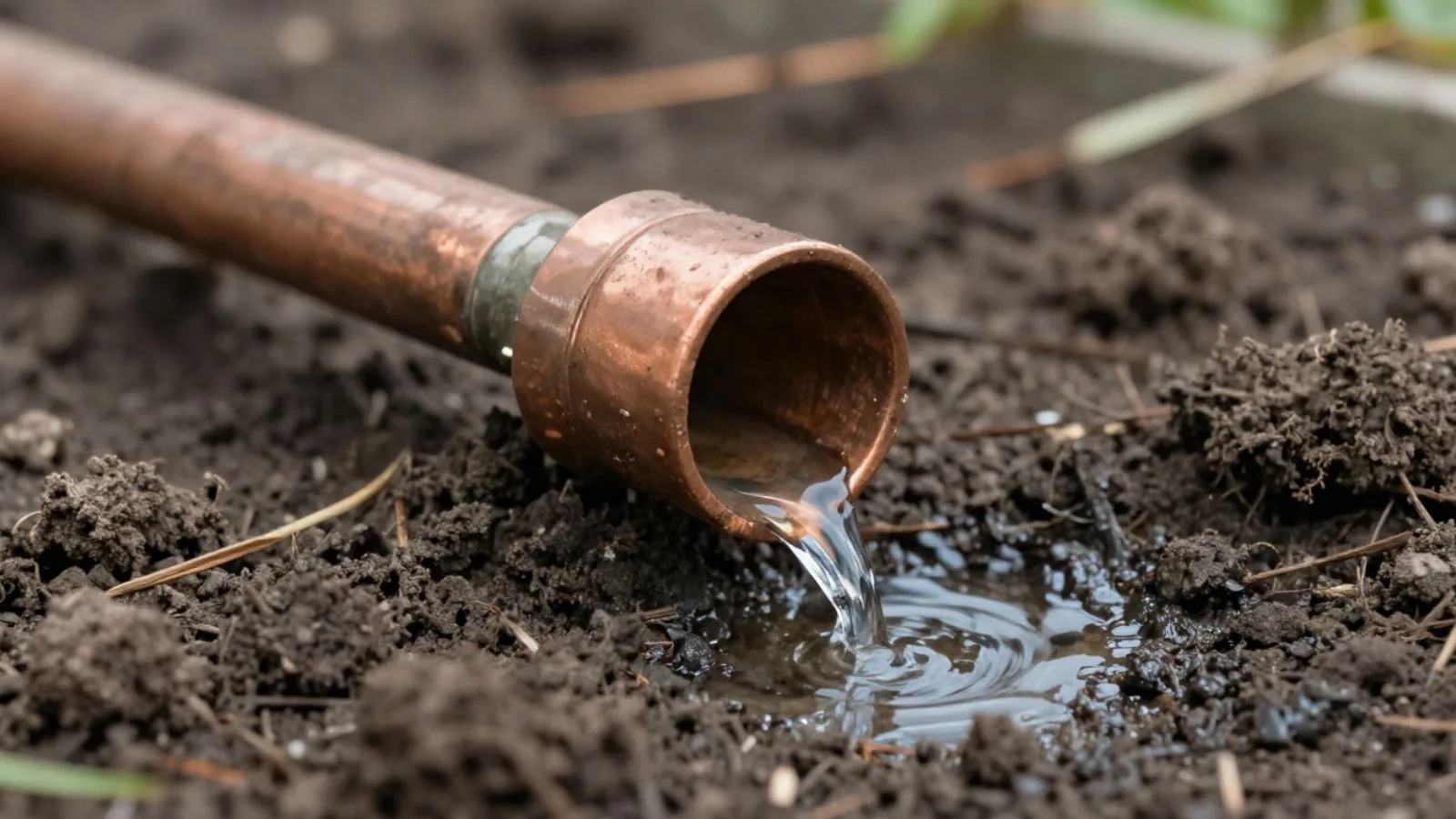
Frozen pipe water damage in Sandusky, OH usually begins after the freeze, not during it. Ice expands inside a pipe and can split the wall of the line, but the split stays plugged until the ice melts. When it does, water flows through a break you could not see, often inside a wall.
If a pipe froze and you now see water, shut off the main valve first. Then call the 24/7 line, move valuables out of the wet area and photograph everything. Do not wait for a repair visit to start the water cleanup.
Thawing water: the emergency after a freeze
The dangerous moment is the thaw. Temperatures rise, the ice plug softens and a pipe that held for days starts to spray inside a ceiling or a wall cavity. That is why a house can look fine at breakfast and be soaked by afternoon.
- A faucet that ran slowly or not at all during the cold snap now flows normally
- A new stain, bubble or sag on a ceiling or wall near a supply line
- The sound of running water when every fixture is off
- A sudden drop in water pressure after a freeze
- Frost or a visible bulge on a pipe in a garage, crawl space or exterior wall
Any one of these after a freeze is reason to shut off the water and call.
What freezes, and where
Freezing needs cold air reaching the pipe and not enough heat to keep it above freezing. The usual locations are the same in most cold-climate homes: pipes in exterior walls, lines in an unheated crawl space or garage, and supply lines near an attic hatch or rim joist.
This page covers the mechanism and the cleanup. How often pipes freeze at a given address depends on the building and the winter, so ask a plumber about your specific lines instead of assuming. NOAA and the National Weather Service publish temperature data if you want the climate numbers.
| What you see | Likely cause | First step |
|---|---|---|
| No water at a faucet during a freeze | Ice blockage, pipe may be intact | Open the tap, apply gentle warmth, watch for leaks |
| Water appears after the thaw | Split in the pipe wall | Shut off the main, call restoration and a plumber |
| Wet ceiling below a bathroom | Split supply line above | Shut off the main, protect the room below |
| Pressure drops with no visible leak | Hidden split in a wall or crawl space | Shut off the main and check meters or damp areas |
How frozen pipe cleanup works
A plumber replaces the split section. Restoration deals with what the water did first. The crew traces the wet path with a moisture meter, removes standing water, opens only the wall or ceiling sections that cannot dry in place and sets air movers and dehumidifiers.
The process is the same one described under burst pipe water damage, with one difference: the water may have run longer inside a closed wall before anyone saw it. Ceiling damage is covered in ceiling water damage repair, and a crawl space line is handled through crawl space water damage.
Electrical safety after a thaw
Water in a ceiling can reach light fixtures and wiring. If a ceiling sags or drips near a fixture, stay clear, do not flip switches under the wet area and cut power at the panel only if you can reach it on dry ground. For any electrical risk, call the utility or 911 before the restoration line.
The published industry reference for the drying side is ANSI/IICRC S500. Ask whether the crew works to it after a thaw loss.
What shapes the cost of frozen pipe cleanup
Pricing follows the water that escaped, not the freeze itself.
- Time between thaw and shutoff
- The longer water ran after the thaw, the more material is wet.
- Where the split was
- A split inside a closed wall costs more to trace than one in an open basement.
- Rooms affected
- Water that dropped through a ceiling affects both levels.
- Materials
- Insulation, plaster and drywall react differently to prolonged wetting.
- Rebuild scope
- Any opened section needs repair after drying.
Insurers often treat a sudden freeze-related break as a covered event, with limits when a home was unheated or vacant. Check your policy and call your insurer before you sign anything.
☎ Want your real number? Call (567) 406-9153The same line serves nearby towns, including Huron, described on our Huron service page.
Frozen pipe questions from Sandusky homeowners
Yes. A thaw often starts in the middle of the night or on a holiday, so the dispatch line stays open 24 hours a day. Same-day response is offered when crews are available.
Slow, gentle warmth is the safe approach: open the faucet, then warm the pipe with a hair dryer or warm towels, starting nearest the faucet. Never use an open flame or a torch.
If you can see a bulge, a crack or water, do not thaw. Shut off the main and call.
A pipe that has burst usually shows nothing while it is frozen. Water starts after the thaw, as a stain, a drip or a drop in water pressure. If a pipe froze and you now see a wet spot nearby, assume a split until it is checked.
Often, when the freeze was sudden and the home was being heated. Coverage can be limited if the house was vacant or heat was off, so read your policy and ask your insurer.
It can. Pipes in exterior walls, unheated crawl spaces and garages are the usual weak spots. Insulation, sealing air leaks and keeping heat on are the common prevention steps, and a plumber can advise on a specific line.
Water appeared after a freeze?
Call the 24/7 line. A crew can find the split path, extract the water and start drying while the plumber repairs the line.