
Structural drying and dehumidification in Sandusky, OH is the stage that decides whether a water event ends with a dry, sound building or a hidden moisture problem. Extraction removes the standing water, but wall cavities, subfloors, insulation and framing can still be wet. This page explains how that moisture is found and removed.
Walls still damp days after the leak?
If your house smells musty or the baseboards feel cool and damp a few days after a leak, water is still in the structure. That is the situation structural drying is built for. The trade name for the process is water mitigation, and it relies on measured readings, not guesses.
Moisture mapping: measuring before drying
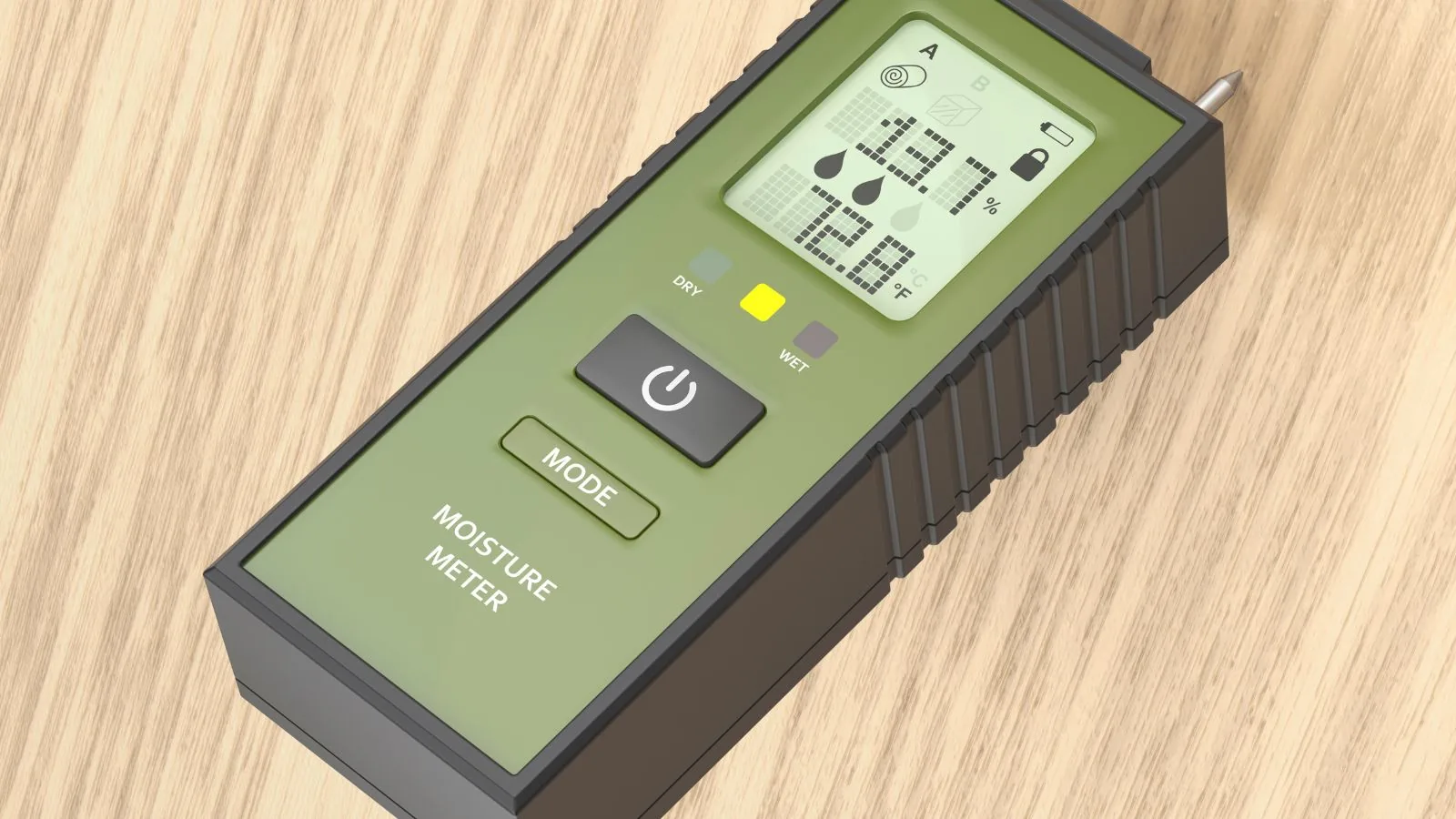
The process starts with a moisture meter and a thermal imaging camera. Readings are taken on drywall, baseboards, framing and flooring, then recorded room by room. The map shows how far water traveled and gives a baseline to measure drying progress.
Drying goals are set by comparing wet readings against dry reference readings from unaffected areas of the same home. Work continues until the wet areas match the dry ones.
Water mitigation: the equipment and what it does
| Equipment | What it does | Where it is used |
|---|---|---|
| Air movers | Push air across wet surfaces to speed evaporation | Floors, wall bases, carpet, cabinet bases |
| LGR dehumidifiers | Pull moisture out of the air so it can keep evaporating | Whole rooms and closed structures |
| Desiccant dehumidifiers | Absorb humidity in cold or very damp conditions | Cold spaces, crawl spaces |
| Wall cavity drying systems | Move dry air into a wall or cabinet base | Closed cavities that cannot be opened |
| Moisture meters and thermal imaging | Measure and map moisture | Every stage, from start to finish |
The industry reference for this work is ANSI/IICRC S500, the published standard for professional water damage restoration. You can ask any company whether its crews follow it.
Daily monitoring and when drying is done
Drying is a process, not a single visit. Technicians return to check readings, move equipment and adjust the plan. When readings in wet materials match the dry reference, equipment is removed and rebuilding can start.
Drying works best when water is removed promptly. EPA guidance says to dry water-damaged areas and items within 24 to 48 hours to prevent mold growth, which is why water extraction and drying follow quickly after a loss.
Where drying fits in each kind of loss
Every water event ends with drying, but each source has quirks. Flooring is the focus of hardwood floor water damage repair and carpet water damage restoration. Walls are covered in wall and drywall repair.
A basement or a crawl space has its own humidity profile. The basement water damage and crawl space pages describe how drying adapts there.
What shapes the cost of structural drying
Drying is billed by the work needed, which depends on how much of the building got wet.
- Area and materials wet
- More rooms and denser materials need more equipment and time.
- Drying days
- Slow-drying materials extend monitoring.
- Equipment count
- Large losses need more air movers and dehumidifiers.
- Access and containment
- Closed cavities and finished rooms add steps.
- Water category
- Contaminated water changes what can be dried in place.
Insurers often want drying logs and photographs as part of a claim, so ask the crew for the moisture readings and equipment records. Check your policy on what water events are covered.
☎ Ask about drying: Call (567) 406-9153Drying services extend to Huron and nearby towns, detailed on the Huron page.
Structural drying questions from Sandusky homeowners
A damp feel often means water is still in walls or flooring. Moisture mapping with a meter and thermal camera finds it. If readings are high, professional air movers and dehumidifiers dry the structure faster than ventilation alone.
It depends on the materials, the water amount and the humidity. Light surface wetting can dry in a few days, while saturated framing, plaster or hardwood takes longer. Daily readings decide when drying is done.
Rental equipment can help with small moisture problems, but wall cavities, subfloors and insulation are hard to dry without a meter and a plan. The visible surface can mislead you.
This page describes professional drying, and it does not cover equipment rental.
It is the process of measuring materials with a moisture meter and thermal imaging, then recording the readings room by room. The map shows where water is and how drying is progressing.
Yes, equipment runs continuously, so power use goes up while drying. Ask the crew about the expected equipment load before work begins.
Walls or floors still damp?
Call dispatch to schedule moisture mapping. Readings show whether the structure is drying or holding water.