
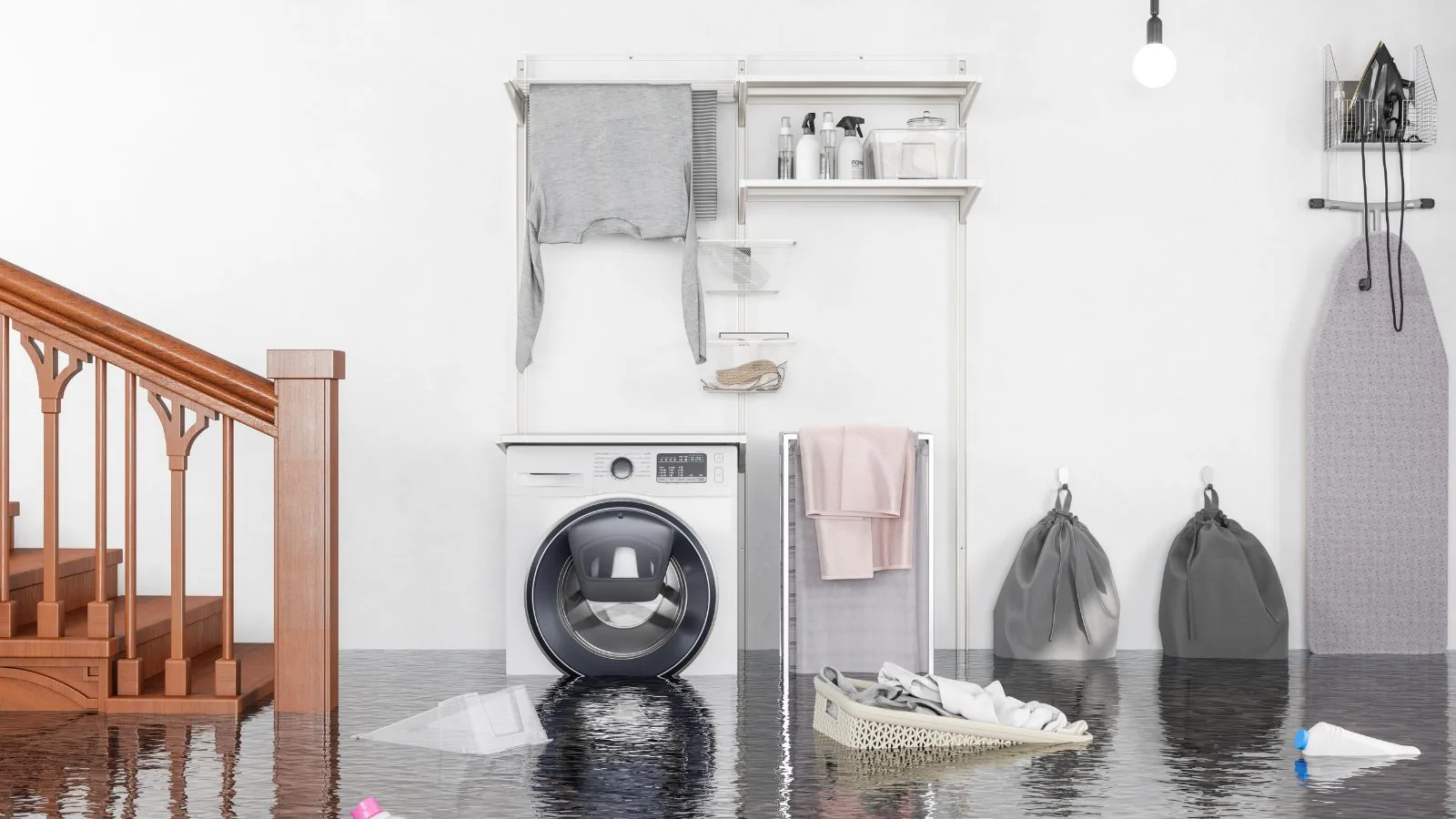
Appliance leak water damage in Sandusky, OH often starts small and ends expensive. A washing machine hose, a dishwasher drain or a refrigerator ice maker line can release water for hours or leak slowly for weeks. If water is on the floor now, treat it as an emergency and call the 24/7 line.
Close the appliance supply valve first, then unplug the unit if the floor around the outlet is dry. If the outlet is wet, leave it and cut power at the panel from a dry position. Move rugs and cardboard off the floor and photograph the source.
When an appliance leak is an emergency
Most appliance leaks are not dramatic. They become emergencies when water spreads under cabinets, down through a floor or into a basement ceiling. These signs point to a leak that has outgrown a mop and towels:
- Water that pools after you wipe it up
- Warped, cupped or swollen flooring beside the appliance
- A musty smell near a dishwasher, washer or refrigerator
- A stain on the ceiling below a second-floor laundry
- A water meter that moves when everything is off
Common appliance failure points
| Appliance | Common failure | Where water ends up |
|---|---|---|
| Washing machine | Supply hose, drain hose, pump | Floor, wall base, ceiling below |
| Dishwasher | Supply line, door gasket, drain hose | Kitchen subfloor, cabinet base |
| Refrigerator | Ice maker line, drain pan | Kitchen floor, adjacent cabinets |
| Water softener or filter | Fitting, tank seam, bypass valve | Basement floor, drain pan area |
The appliance repair belongs to a plumber or appliance technician. Restoration deals with the water in the building.
Hidden moisture after an appliance leak
The surface lies. Water under a dishwasher runs along the subfloor, behind a toe kick and into a cabinet base. A kitchen can look dry while the cabinet interior holds moisture, which is why the crew uses a moisture meter and thermal imaging instead of trusting touch.
If cabinets, drawers or the sink area are affected, the kitchen water damage page covers cabinets in detail. If the leak reached the floor surface, hardwood floor repair and carpet water damage explain what each flooring type needs.
How the cleanup works
Standing water is extracted first. The crew then checks floors, wall bases and cabinet interiors with moisture meters, removes materials that cannot dry in place and sets air movers and dehumidifiers. The drying plan follows the approach in structural drying and dehumidification.
Once readings return to normal, flooring, toe kicks and baseboards are reinstalled. The appliance returns only after its failed part has been replaced.
The published reference for water damage restoration is ANSI/IICRC S500. Ask any company whether its crews follow it for an appliance loss like this one.
What shapes the cost of appliance leak cleanup
These jobs range from a quick extraction to a floor replacement.
- Duration of the leak
- A leak found within minutes is smaller than one that ran for days.
- Flooring type
- Sealed tile is simpler than laminate, hardwood or carpet.
- Cabinet damage
- Wet cabinet bases often need removal or drying in place.
- Water category
- Clean supply water and drain water are handled differently.
- Rebuild scope
- Flooring, toe kicks and baseboards may need replacing after drying.
A sudden appliance failure is often covered, while a leak that ran slowly for months may be excluded. Ask your insurer how they classify your event and keep photos of the failed part.
☎ Want your real number? Call (567) 406-9153Calls from Huron and nearby towns come through the same line, and the Huron page explains how that works.
Appliance leak questions from Sandusky homeowners
Yes. A washer hose can fail in the middle of the night, so the dispatch line is open around the clock. Where availability allows, a crew can respond the same day, and you hear that on the first call.
Close the appliance supply valve, usually behind or beside the machine. If the floor is dry, unplug the appliance. If water is on the floor near the outlet, stay away and shut power at the panel from a dry spot.
Then call the 24/7 line.
Washing machine supply hoses, dishwasher supply and drain lines and refrigerator ice maker lines are common. They can leak slowly for weeks or fail suddenly, and the slow ones often reach the subfloor before anyone notices.
Sudden failures are often covered, while long-term seepage is commonly excluded. If you find old moisture, check your policy before you assume, and photograph everything.
Yes. Water goes under cabinets, behind baseboards and into the subfloor. A moisture meter finds it. Surfaces that feel dry can still hold water underneath.
Appliance leak soaked the floor?
Call the 24/7 line. A crew can extract the water and check the floor and walls for hidden moisture.