
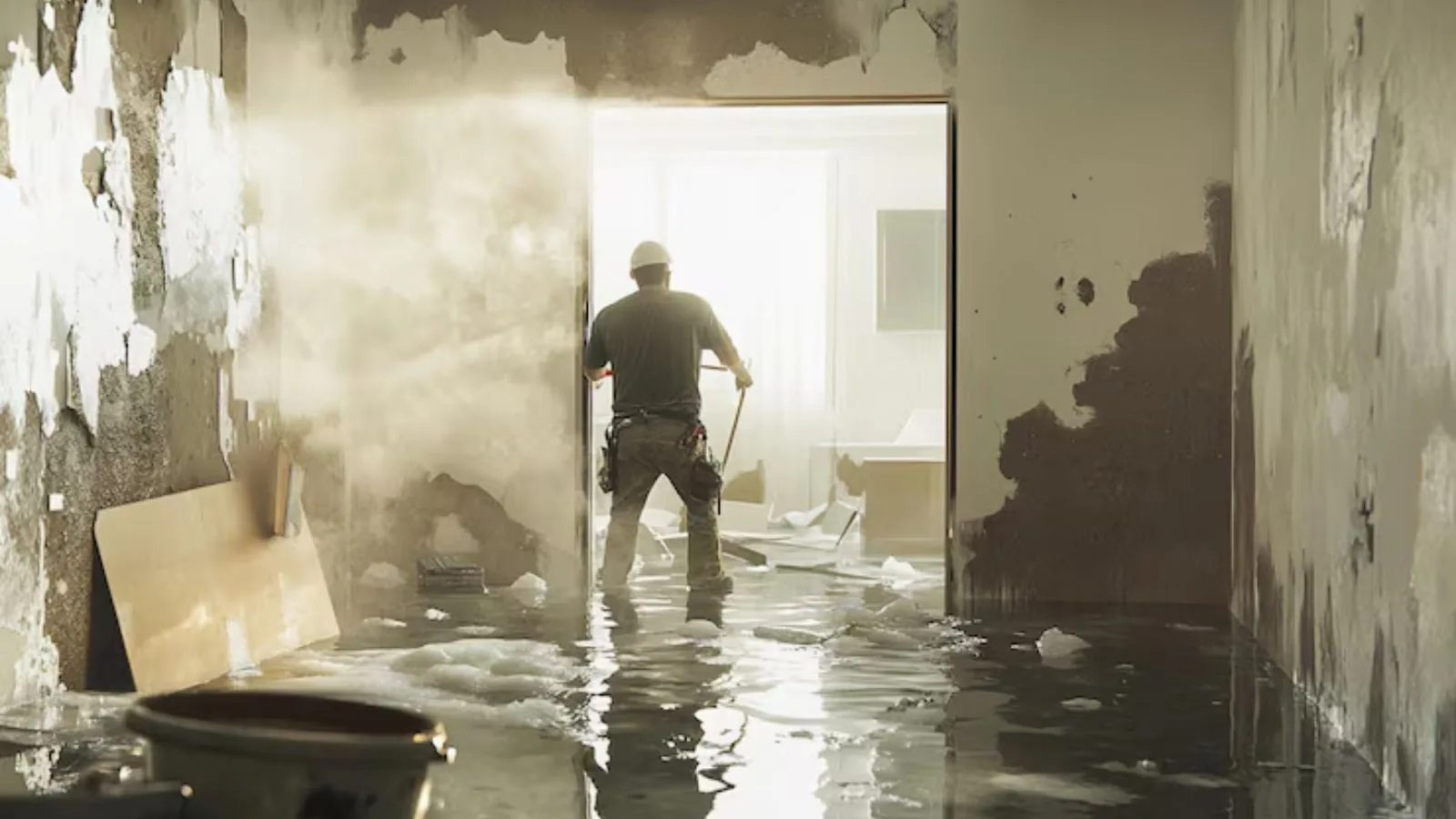
A wall is a sandwich of paint, drywall, insulation and framing, and water can sit in the middle for weeks. Wall and drywall water damage repair in Sandusky, OH starts with mapping moisture instead of guessing, because the surface rarely shows the whole story.
If a wall is stained, soft or bubbling, stop using any fixture on the other side of it and avoid touching the area with wet hands near outlets. Photograph the wall from several angles and note when you first noticed it.
What water does inside a wall
Drywall wicks. Water at the base climbs upward through the paper, drywall loses strength and insulation holds water like a sponge against the framing. Paint may blister, baseboards may swell and a musty smell may appear before any stain does.
| What you see | What it often means | Next step |
|---|---|---|
| Bubbling or peeling paint | Moisture behind the paint | Moisture map, find the source |
| Soft or crumbling wallboard | Prolonged or heavy wetting | Remove and replace affected sections |
| Swollen or stained baseboards | Water at the wall base | Check wall cavity and floor |
| Stain that returns after painting | Ongoing leak or trapped moisture | Dry, find source, then repair |
Walls that get wet from the outside
Not every wall leak starts with plumbing. Siding that has failed, a window that leaks or flashing that has loosened can send rain into a wall. Callers sometimes describe a kitchen wall damaged by water that entered behind siding, and a large hole forming in the wall as the board softened.
When the source is outside, restoration dries and repairs the interior while a contractor repairs the exterior. Weather entry is covered in storm water damage cleanup, and ceiling problems from the same leaks are in ceiling water damage repair.
Finding the real extent before cutting
The crew checks both sides of the wall with a meter and a thermal camera. A common approach is a flood cut, which removes drywall a few inches above the water line so that the insulation and framing behind can be inspected and dried.
Air movers and dehumidifiers dry the rest. Where a cavity is closed, small vented openings let dry air move in. The method follows structural drying and dehumidification.
Rebuilding the wall
Once the framing reads dry, new insulation and drywall go in, joints are taped and finished, and the wall is primed and painted. Baseboards are reinstalled. If the leak started at a fixture or a failed supply line, the related pages are burst pipe water damage and kitchen water damage.
A repair that skips drying will often fail. Paint over moisture traps it, and the stain, the smell or the mold comes back.
ANSI/IICRC S500 is the published standard that covers how wet wall cavities are assessed and dried. Ask whether the crew works to it before any drywall is cut out.
Safety before anyone opens a wall
Wiring runs through most wall cavities. Do not cut or drill into a wet wall until the power to that circuit is off.
Wet drywall can be heavy and may fall, so keep people out from under a bulging ceiling or wall.
What shapes the cost of wall and drywall water damage repair
Wall repairs scale with how much of the wall was wet.
- Height and length affected
- A baseboard-high flood cut is smaller than a full wall replacement.
- Insulation
- Wet insulation is commonly removed and replaced.
- Source and duration
- Long-term leaks affect more framing and paper.
- Finish work
- Taping, texture and paint add steps after drywall.
- Mold risk
- Older moisture may need extra assessment before rebuilding.
Insurers often cover sudden water events and may treat slow seepage differently. Ask your carrier about wallboard coverage, and photograph the wall before any cutting.
☎ Ask about your wall: Call (567) 406-9153The same crews serve Huron and nearby Erie County, as listed on the Huron page.
Wall and drywall questions from Sandusky homeowners
If it was clean water and dried quickly, sometimes. Drywall that sagged, crumbled or stayed wet for days is usually replaced. A meter and a close look at the paper facing decide.
Bubbling paint, soft wallboard and stains point to moisture in or behind the wall. The source might be a supply line, a leaking window, siding or the roof.
Not always. Small openings or vented drying systems can dry a cavity without removing the whole wall. If insulation is soaked, it usually has to come out.
Mold needs moisture, and wet wallboard that stays wet is a candidate. Musty smell, dark spots and soft material are signs to have the wall checked. Health questions belong to a physician.
Sudden events such as a pipe failure or storm damage are often covered. Slow seepage is commonly excluded. Ask your insurer and keep photographs.
Wall damp or damaged?
Call dispatch to have the wall mapped before anyone cuts into it. The crew maps moisture through the wall before opening it.