
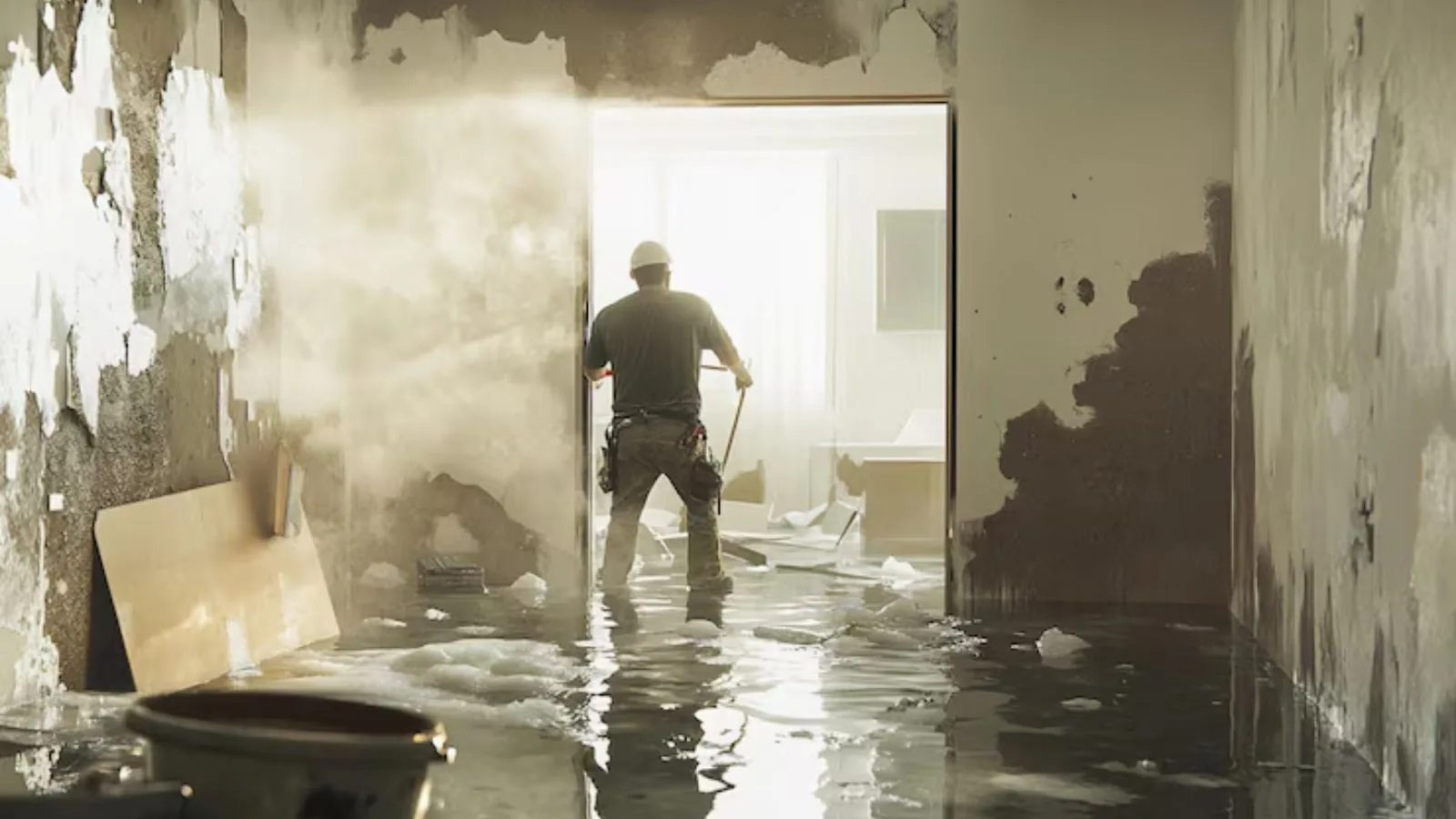
A house can look perfect and still carry a history of water. Fresh paint covers stains, new flooring hides a swollen subfloor and a quick fix can leave a leak that returns. Buyers often discover water damage after moving in, when the repair is theirs to pay for. This guide gives Sandusky, OH buyers a clear way to look for signs before making an offer.
You do not have to be an expert. You only need to look in the right places, ask the right questions and know when to call for a measurement.
Walk the house with a flashlight
Bring a bright flashlight and a notebook. Start at the ceiling of every room and look for stains, ring marks and paint that bubbles or peels. Then look at the walls near plumbing, windows and exterior corners. New paint in one patch of an otherwise older room is a clue. So is a ceiling with a freshly sprayed texture in one area.
Check floors for cupping, buckling, soft spots and gaps. Stand on each room and walk slowly. A floor that feels springy near a bathroom, a kitchen sink or an exterior door may have been wet. Check baseboards for swelling and discoloration, and look at the caulk around tubs and showers.
Use your nose
A musty or earthy smell in a room, a closet or a basement is a signal. Do not accept the explanation that the house has been closed up. Ask the agent to open windows and run the HVAC, then smell again. Smells that return after airing out often come from damp materials inside walls or under floors. The causes are covered in our guide to musty smells after water damage.
Basement, crawl space and utilities
Basements tell the most honest story. Look at the lower part of the foundation walls for white mineral deposits, rust stains on metal, peeling paint and watermarks. Check the floor around the sump pit and the water heater. A dehumidifier running in an otherwise empty basement is often a sign of a damp space.
Look at the water heater, the furnace and the washing machine hookups for rust, drip trays and corrosion. Check under sinks for staining and soft cabinet floors. If you see evidence of past leaks, the pages on water heater leak cleanup and kitchen water damage explain what the damage usually looks like.
| Where you look | What you see | What it can mean |
|---|---|---|
| Ceiling | Brown rings, sagging, fresh paint patch | Roof or plumbing leak above |
| Wall near a window | Bubbled paint, swollen trim | Water entering around the frame |
| Floor by a bathroom or kitchen | Cupping, soft feel, stains | Supply or drain leak |
| Basement wall base | White crust, dark tide marks | Repeated seepage or flooding |
| Cabinet under a sink | Warped floor, stains, rust | Slow leak at a drain or supply line |
| Exterior grade | Low spots near foundation, clogged gutters | Water directed toward the house |
Ask the seller direct questions
Request the property disclosure form and read the water-related answers carefully. Ask when any leak happened, what caused it, who repaired it and whether receipts and photos exist. Ask whether any insurance claim was filed. A seller who is honest and organized will usually have answers. A seller who cannot say who did the work, or says it was done long ago without detail, is telling you something too.
Put it in writing
Ask for written answers, repair receipts and any restoration records such as moisture logs. Share them with your inspector. If there was a claim, ask your insurer to check the property's loss history report. Include any repairs you require in the purchase agreement before the inspection period ends.
Hire an inspector who measures
Ask your home inspector whether they use a moisture meter and a thermal camera, and request readings on any suspect area. A thermal camera shows temperature differences that can point to damp materials, and a meter confirms moisture content. If something looks wrong, a restoration company can perform a more detailed moisture survey of walls, floors and ceilings before you commit.
If a survey finds active water, the next step is a repair plan, sometimes with structural drying and removal of damaged material. If it finds old damage that is dry, you will want to know what was repaired and how. Either way, you gain leverage to ask for a repair credit or a lower price.
Local note for Sandusky and Huron
Sandusky and Huron both have older housing near the lakeshore and the bay, and some of it sits on low ground. Look up the address on the FEMA flood map and ask your insurer for a flood quote before you finalize an offer. The City of Sandusky building division can tell you about permit history on a property, and the City of Huron can do the same for Huron addresses.
If you are weighing a home near the shore, review the service area page and the Huron page to see how water damage calls are handled in each town.
What to do if you find damage after buying
Document it right away, with photographs and dates. Check your purchase agreement and the seller disclosure. Talk with your insurer before starting repairs if you think a claim is possible. If water is active or recent, start with water extraction, then drying. Keep records of everything. A few hours of looking before you buy are far cheaper than discovering the same damage after closing.
Questions from home buyers
Yes. Ohio sellers of residential property are generally asked to complete a property disclosure form that includes water intrusion questions. Ask for it, read it and ask follow-up questions in writing.
A general inspection finds visible signs and may use a moisture meter. Hidden problems inside walls or under floors can be missed. Ask the inspector what tools they use and request a moisture reading on suspect areas.
Not necessarily. A repaired and dried leak with documentation is different from an active problem. What matters is whether the source is fixed, the materials are dry and the repair was done properly.
Yes. Look up the address, and ask your insurer about flood coverage and its cost before you commit. Flood insurance is usually separate from homeowners coverage and has a waiting period.
Concerned about a house?
Call the 24/7 line and ask what a moisture check involves.