
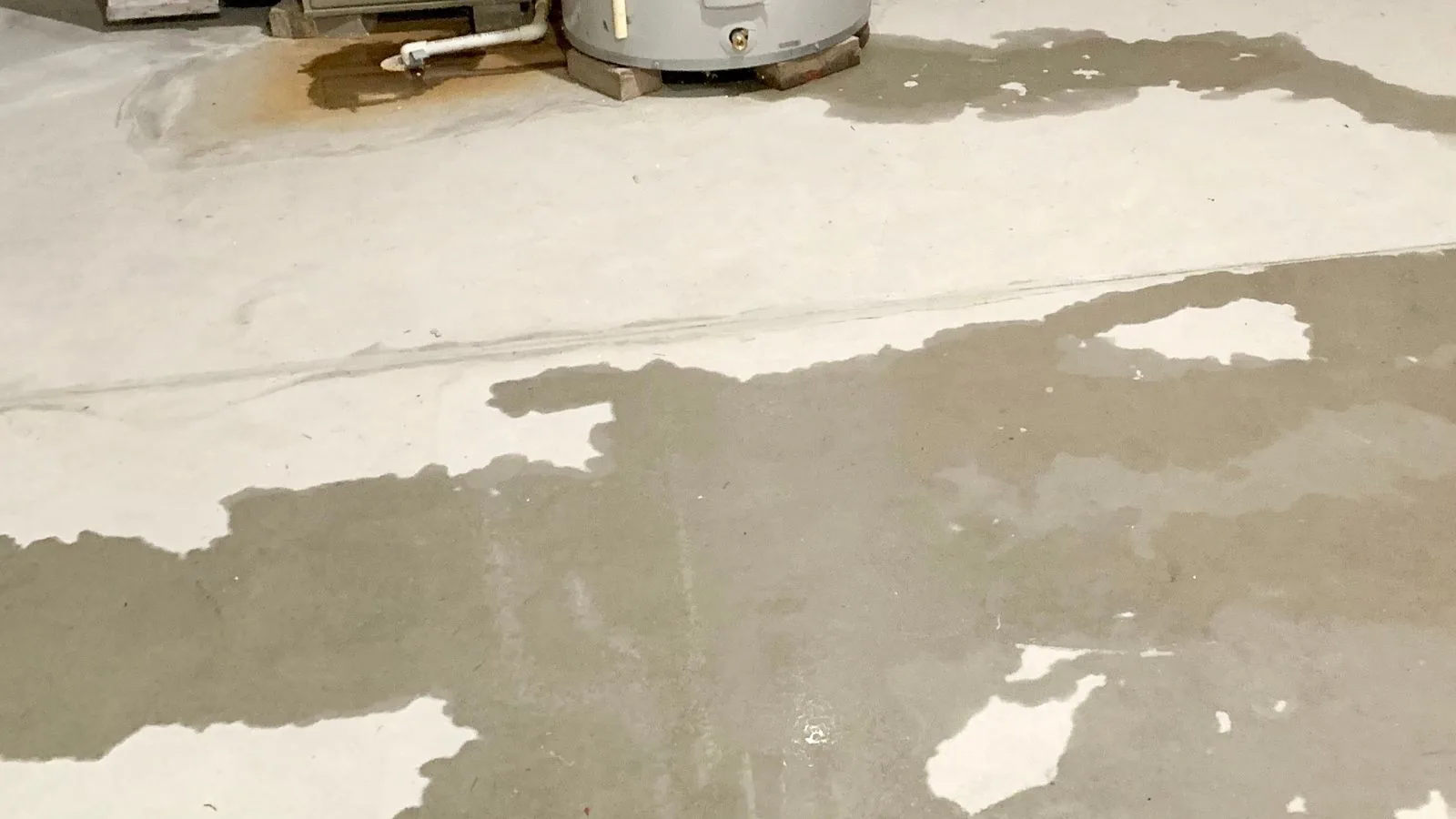
Some of the most expensive water damage starts as something small and invisible. A pinhole in a copper line inside a wall, a slow drip under a slab or a loose fitting in an attic can run for weeks before a stain shows. This guide gives Sandusky, OH homeowners a simple method to find out whether they have a hidden leak, and clues for where it might be.
The water meter test
This is the most useful test you can do. It takes about fifteen minutes, and it tells you whether water is moving through your system when nothing should be using it.
- Turn off every faucet, appliance and fixture. Make sure no one flushes a toilet.
- Find the water meter, usually near where the line enters the house or in a curb box.
- Look at the leak indicator, a small triangle or dial, and see if it moves.
- Write the reading, wait fifteen to thirty minutes without using water and read it again.
- If the reading changed, water is leaking somewhere after the meter.
If the meter changes, close the main valve and read it again. If the reading stops moving, the leak is inside the house. If it keeps moving, the leak is between the meter and the valve. Toilets that run silently are a common cause, so also drop a few drops of food coloring into each tank and watch the bowl for color.
Clues around the house
| Clue | Where to look |
|---|---|
| Hissing or running sound with everything off | Walls near supply lines, around the water heater, under floors |
| Warm spot on a floor | Hot water line under a slab or in a floor |
| Stained, bubbled or soft drywall | Behind the wall, above in the ceiling cavity or in the room above |
| Musty smell with no obvious source | Cabinets, crawl spaces, behind appliances |
| Higher water bill without more use | Anywhere after the meter, including outdoor lines |
| Low water pressure | A pipe losing flow before it reaches fixtures |
| Cracks in a slab or foundation | Pipes beneath that may be shifting |
Check the places that often fail first: under sinks, around toilets, behind washing machines, near the water heater and in the attic below the roof. Look for corrosion, white crust on fittings and damp insulation. Check outdoor hose bibs and irrigation lines too.
Leaks under concrete
Homes built on slabs hide pipes in or under the concrete. A leak there can warm the floor, create a damp spot on carpet or lift flooring from below. Locating it takes acoustic or thermal equipment, and a plumber usually handles repair. The consequences and cleanup are described on the slab leak water damage page.
Do not cut or drill to chase a leak
Opening a wall or floor without knowing what is behind it can hit wiring or a pressurized line. If you suspect a leak near electrical equipment, keep clear and call a professional. Water that reaches outlets or a panel is a shock hazard, so shut off power only from a dry spot or call the utility.
Thermal imaging and moisture meters
Professionals use a thermal camera to see temperature differences that can point to wet areas, and a moisture meter to confirm. The pair can map a leak path without damaging finished surfaces. Once a wet area is found, the plumber repairs the source, and the crew dries the structure using the methods on the structural drying page.
If a hidden leak has already soaked a wall or ceiling, the wall and drywall page and the ceiling page describe what comes next. If water is pooling, water extraction comes first.
Local note for Sandusky and Huron
In northern Ohio, freeze and thaw cycles stress pipes and joints, and a leak can open after a hard cold snap. The City of Sandusky operates its own water system, so the public side of the meter belongs to the city while the piping inside is yours. If the meter test points to the line before your shutoff, call your water provider.
Huron has its own utility. Calls from both towns reach the same dispatch line, as described on the service area page and the Huron page.
Next steps once you find or suspect a leak
- Close the main valve if the leak is serious
- Photograph any damage and note the date
- Call a plumber to repair the source
- Call a restoration crew to extract water and dry the structure
- Tell your insurer, and ask how they treat hidden or slow leaks
Insurers often treat gradual leaks differently from sudden bursts, so documentation matters. The sooner you act, the less water reaches framing and insulation, and the less drying is required. If you need help locating wet areas, call the 24/7 line and describe your clues. Meanwhile, keep a simple log of the meter reading each morning for a few days, because a number that creeps upward overnight is the strongest evidence you can give a plumber.
Questions about hidden leaks
Check the water meter with every fixture off. If the dial or the low-flow indicator still moves, water is going somewhere. A rising bill, hissing sounds and unexplained damp spots are other clues.
It is a leak in a pipe under or inside a concrete slab. Signs include warm spots on the floor, the sound of running water and a rising bill. Locating one takes special equipment.
No. Restoration finds and dries the water damage. A plumber repairs the pipe. Many hidden leaks need both.
Even a slow leak can soak framing, insulation and subfloor over weeks. Damage can be extensive before any stain shows.
Think water is hiding?
Call the 24/7 line and describe the clues.