
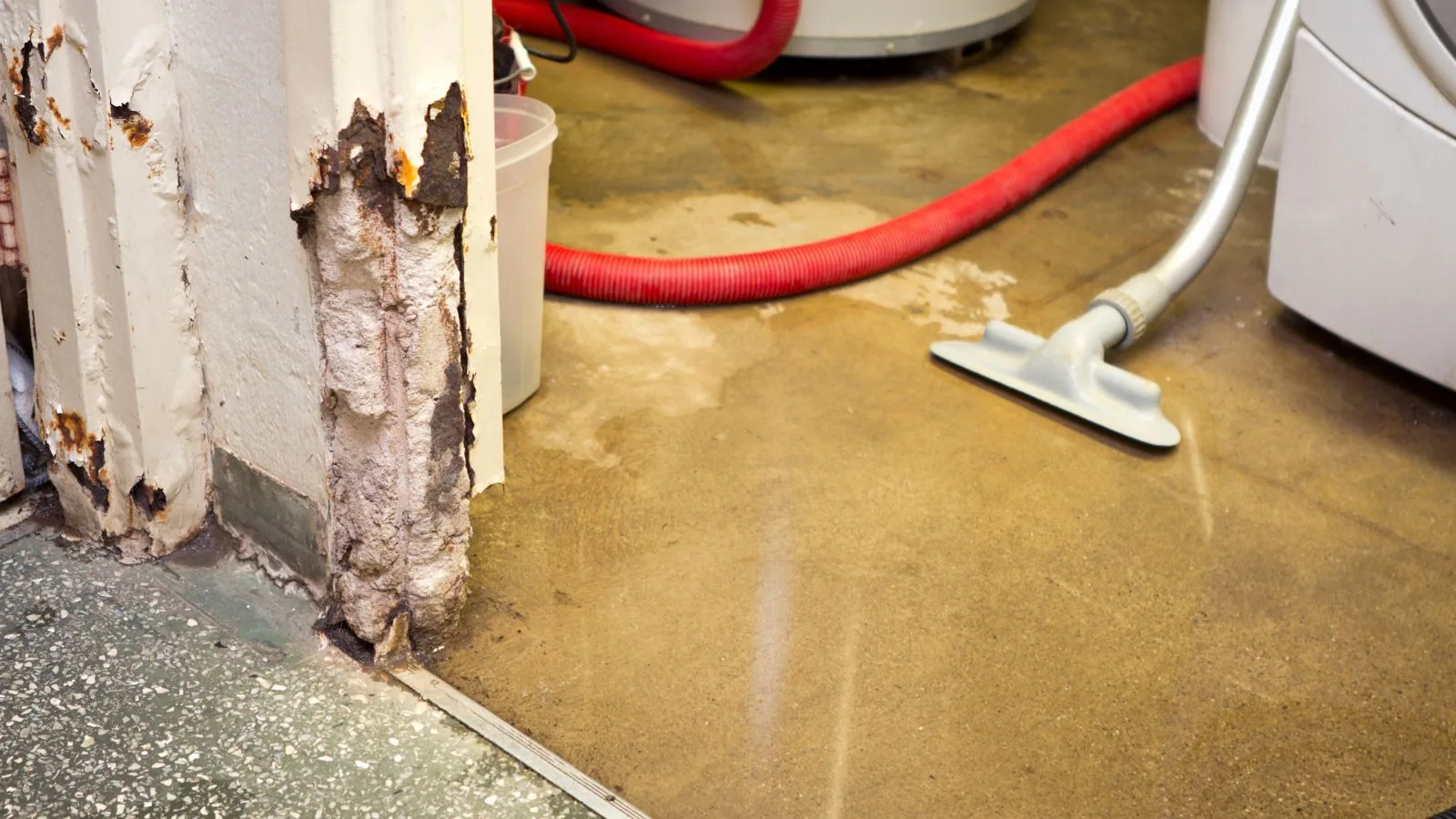
You fixed the leak, the carpet feels dry and the room still smells like a damp basement. That smell is information. It tells you moisture is still sitting somewhere in the building, and it will keep coming back until that moisture is found and removed. This guide explains where odor hides after water damage and how to approach it.
We cover water damage restoration for Sandusky, OH, which means extraction and drying. We do not cover mold remediation, so this guide stays on the moisture side: where it hides, how to find it and when to call for help.
Why a musty smell appears after a leak
Damp organic materials such as wood, paper facing on drywall and carpet backing support microbial growth when they stay wet. The smell usually comes from those growing organisms and their byproducts. EPA guidance says water-damaged areas should be dried within 24 to 48 hours to prevent mold growth, which is why odor weeks later usually means something stayed wet past that window.
The smell often gets stronger when humidity rises or the furnace and air conditioner cycle. Air moving across a damp cavity picks up the odor and carries it into the room. That explains why a smell can disappear on a dry winter day and return in humid weather.
Where moisture hides after a leak
| Location | Why it holds water | How it is found |
|---|---|---|
| Carpet pad and subfloor | Pad acts like a sponge and the subfloor sits beneath it | Moisture meter reading through the carpet |
| Behind baseboards and drywall | Water wicks upward inside the wall cavity | Thermal imaging plus meter probes |
| Insulation in walls and ceilings | Fiberglass and cellulose hold water against framing | Meter readings at test openings |
| Cabinet toe kicks and vanity bases | Slow leaks collect in closed spaces | Looking inside with a light and a meter |
| Crawl spaces and basements | Soil moisture and poor airflow keep humidity high | Humidity readings and visible inspection |
Most of these places never feel wet to the hand. That is why professional crews rely on moisture meters rather than touch.
A simple way to trace the smell yourself
- Run the room with the heating and cooling off for an hour, then note where the smell is strongest.
- Check under sinks, behind appliances and inside closets that share a wall with the original leak.
- Look for stains, bubbled paint, warped baseboards or a soft spot in the floor.
- Lift a corner of carpet only if you can do so safely, and smell the pad and the floor beneath.
- Check the basement or crawl space for standing water or a humidity reading above about 60 percent on a household hygrometer.
Write down what you find and where. Notes like these help a crew start in the right place, and they also help if you later file an insurance claim.
When to stop and get help
Leave the area and call a professional if the smell is sharp or chemical rather than musty, if anyone has breathing trouble in the room or if you see large patches of discoloration. Do not cut into walls or lift large areas of flooring yourself if sewage or contaminated water was involved.
Why surface fixes fail
Deodorizers, candles and scented sprays mask a smell without changing its cause. Ozone generators are sometimes sold for this job, but they do not dry a wall and can irritate lungs. The only reliable fix is to remove the water. That means finding the wet materials, drying them to a dry reference and replacing anything that cannot be dried.
If water has been in the building for days, the crew may also need to remove porous materials such as saturated carpet pad or wet insulation. This is explained on the carpet water damage page and the wall and drywall page.
What a professional moisture survey does
A crew arrives with moisture meters, a thermal imaging camera and a hygrometer. They compare readings in the affected area against a dry area of the same material. Thermal imaging highlights cooler wet zones, and the meter confirms them. The result is a map of what is wet, which guides drying equipment placement. You can read how that equipment works on the structural drying page.
If the survey finds that materials are too far gone, the crew explains what should be removed and why. Scope and price are explained before work starts, and photos and readings are saved for your insurer.
Local note for Sandusky and Huron
Homes near Lake Erie and Sandusky Bay can carry higher indoor humidity in summer, and basements and crawl spaces in older houses can stay damp for long stretches. Keeping a basement dehumidifier running and checking it regularly is a normal precaution in this climate.
If the smell shows up after a spring storm or a heavy rain, the basement water damage page explains what to look for. Calls from Huron and nearby towns on the service area page are handled the same way as Sandusky calls.
Keeping the smell from coming back
- Fix the source of the water first, whether it was a leak, a drain or a grading problem
- Dry everything the water touched and verify with readings
- Keep indoor humidity under about 50 to 60 percent
- Run bathroom and kitchen fans and vent dryers outdoors
- Clean and empty dehumidifier pans and condensate drains
If a smell remains after everything is dry, an inspector who specializes in mold can test for it. That is a separate service from restoration. Call the 24/7 line if you need help finding where the moisture is still hiding.
Questions about odor after a leak
Moisture usually remains inside materials the leak reached, such as carpet pad, wall cavities, insulation or a subfloor. Surface drying does not remove it, so the smell returns whenever humidity rises.
Fragrance only covers the smell and does not remove the moisture behind it. Ozone machines can irritate lungs and are not a drying tool. Find and dry the wet material first.
No. It often signals damp materials and microbial activity, but only testing or inspection by a qualified person can say what is growing. A smell is a reason to look, not a diagnosis.
No. This site covers water damage restoration, which removes water and dries the structure. Mold remediation is a separate service, and the EPA publishes guidance on moisture and mold for homeowners.
Smell will not go away?
Call the 24/7 line. A moisture survey can locate what is still wet.